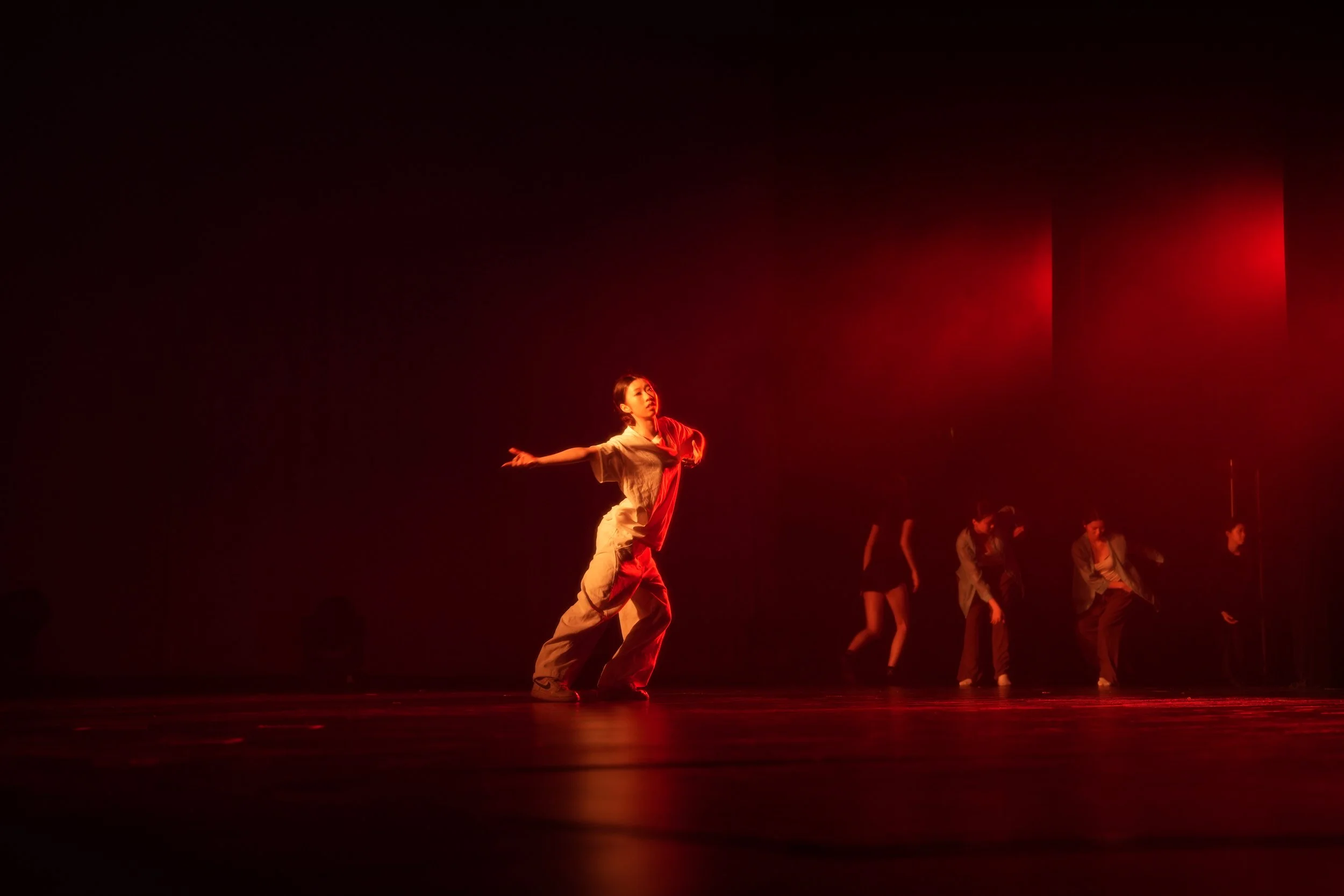
Long to Belong
Performed By: Lilia C. ‘26
Long to Belong
Passion XIX: Reverie
National Honor Society of Dance Arts
April 10th, 2026
Interview
-
“I started with Chinese traditional dance from age 3 through 4th grade, then transitioned into street dance, where I’ve been ever since. Within street dance, I’m most confident in hip-hop and house, and I have a solid foundation in locking and popping as well.”
-
“In my junior year advanced dance course, we were asked to create a piece that conveyed meaning. Ms. Anneliese prompted us to explore our culture and community. That got me thinking. I hold an American passport but rarely celebrate Thanksgiving. I was born and raised in China but rarely celebrate the Dragon Boat Festival. I never felt deeply rooted in one nationality. So I thought about the one thing that has consistently made me feel at home: dance.”
-
“Yes. The piece traces my evolving relationship with dance. It opens with me chasing after my parents’ attention following their divorce. Then I discovered dance. I saw performers under the spotlight and wanted that same sense of being seen. But after chasing that spotlight for a while, I realized that even when the attention came, it left me feeling empty. It wasn’t until I was introduced to house dance and its community that something shifted. In house, people don’t dance to impress. They dance to exchange, to communicate, to show love. That’s when I finally felt like I belonged. Not to a nationality. Not to the validation I’d been seeking. But to movement itself.”
-
“Family, connection, belonging, dance, and longing.”
“Roughly around 5 hours of rehearsal in total.”
-
“The storytelling. This was the first piece I’d ever made that was built around a specific narrative and emotional arc. I had to figure out how to communicate each stage of the story through movement alone and make an audience feel the yearning, the emptiness, the shift, without saying a word.”
-
“I started with the story, then chose music that matched the emotional texture of each section. From there, I looked at the dancers I’d be working with and thought about how to use their individual strengths. I mapped out formations first, the big picture, before getting into specific choreography. Then I built out each section and scheduled rehearsals based on who was needed for which parts.”
-
“Passion is what makes you feel like there’s a reason to show up. It’s the thing that fills you when you do it and makes you want to keep doing it for as long as possible.”
-
“It’s become a core part of who I am. A lot of people know me through dance, and I’m genuinely happy to carry that. When I introduce myself, I introduce myself as a dancer.”
-
“Honestly, it’s not even a moment onstage. It’s standing backstage watching my friends perform. Seeing how empowered they look, how much they’ve grown, makes me so proud. It reminds me of how much dance can do for a person.”
-
“That it's a community, not just a commitment.”